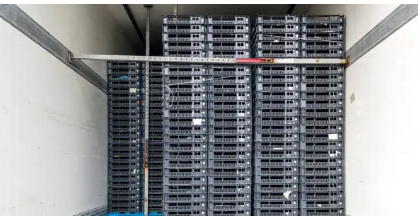
Pallet Freezer Spacers’ How Australian Cold Chain Warehouses Improve Efficiency and Reduce Energy Costs
Australia’s cold chain logistics industry faces constant pressure to maintain strict temperature control while reducing operating costs, particularly in large-scale frozen food storage and distribution facilities. One of the most overlooked yet highly effective tools in this environment is the use of efficient pallet freezer spacers. These simple structural aids play a critical role in ensuring consistent airflow, reducing frost buildup, and improving freezer energy efficiency across warehouses in Sydney, Melbourne, Brisbane, and regional distribution hubs.
In modern Australian cold storage operations, efficient pallet freezer spacers are increasingly adopted as standard practice rather than optional accessories. They help maintain separation between pallet loads, allowing cold air to circulate evenly and reducing the strain on refrigeration systems. This results in more stable product temperatures, lower electricity consumption, and improved compliance with food safety standards.
The Role of Pallet Freezer Spacers in Australian Cold Chain Logistics
Australia’s food supply chain is heavily dependent on long-distance transportation and temperature-controlled storage. From seafood in Tasmania to meat exports from Western Australia, maintaining frozen integrity is essential.
Pallet freezer spacers are designed to create consistent vertical and horizontal gaps between palletised goods stored in blast freezers and cold rooms. Without these gaps, pallets can block airflow, creating “hot spots” where products may partially thaw or degrade in quality.
In large Australian distribution centres, particularly those servicing major supermarket chains, airflow obstruction can lead to significant inefficiencies. Refrigeration systems must work harder to compensate, increasing energy use and accelerating equipment wear.
By introducing structured spacing, facilities can achieve:
● More uniform temperature distribution
● Reduced compressor cycling
● Improved freezing speed for incoming goods
● Lower risk of product spoilage
This makes spacers a practical investment for both large-scale logistics operators and mid-sized cold storage providers across Australia.
Energy Efficiency and Airflow Optimisation
One of the primary advantages of pallet freezer spacers is their direct impact on energy efficiency. Cold storage facilities account for a substantial portion of industrial electricity consumption in Australia, particularly in states with high freight activity such as New South Wales and Victoria.
When airflow is obstructed, refrigeration units must run longer cycles to maintain target temperatures. Over time, this leads to excessive energy costs and increased maintenance requirements. Properly designed spacers mitigate this issue by ensuring cold air can circulate freely around all stored goods.
In optimised setups, air distribution follows a predictable pattern, allowing evaporators to operate at peak efficiency. This is especially important in blast-freezing environments, where rapid temperature reduction is required.
At this stage of implementation, many operators begin to see the value of efficient pallet freezer spacers not just as a storage aid, but as a strategic energy management tool. Facilities that integrate them correctly often report measurable reductions in kilowatt-hour usage and improved freezer uptime reliability.
Best Practices for Choosing Spacers in Australian Facilities
Selecting the right pallet freezer spacers depends on the type of goods stored, warehouse layout, and the specific refrigeration system in use. Australian operators typically consider durability, load-bearing capacity, and compatibility with standard pallet sizes (such as CHEP pallets widely used across the country).
Key considerations include:
● Material selection: High-density plastics are commonly preferred due to resistance to low temperatures and moisture exposure
● Load stability: Spacers must support heavy frozen goods without deformation
● Ventilation design: Open-frame structures are ideal for maximising airflow
● Ease of handling: Lightweight designs improve warehouse efficiency and reduce manual handling risks
In high-throughput facilities such as those servicing export meat processing plants or frozen goods distribution hubs, consistency in spacer design is essential. Standardisation ensures predictable airflow patterns and simplifies warehouse stacking protocols.
Operators should also consider long-term durability, as replacement costs and operational disruptions can outweigh initial savings from lower-quality products.
Operational ROI and Compliance Benefits
Cold chain operators in Australia are increasingly required to meet strict food safety and temperature compliance standards under national regulatory frameworks. Maintaining consistent freezing conditions is not only a quality issue but also a legal requirement in many supply chains.
The introduction of structured spacing systems significantly reduces temperature variability across stored inventory. This improves traceability outcomes and reduces the risk of compliance breaches during audits.
From a financial perspective, the return on investment is driven by:
● Lower electricity consumption
● Reduced equipment maintenance costs
● Decreased product loss due to thawing or freezer burn
● Improved warehouse throughput efficiency
At this operational level, efficient pallet freezer spacers become a cost-control mechanism rather than a simple storage accessory. Many Australian logistics managers now include them in broader cold-chain optimisation strategies alongside insulation upgrades and smart temperature-monitoring systems.
Implementation Challenges and Industry Adoption
Despite their benefits, some facilities are slow to adopt pallet spacing systems due to perceived upfront costs or workflow disruption during implementation. However, case studies across Australian cold storage networks show that integration is typically straightforward and quickly offset by operational savings.
Training warehouse staff in proper placement procedures is essential to maximising benefits. Once integrated into standard operating procedures, spacers require minimal ongoing management while delivering continuous performance improvements.
Conclusion
As Australia’s cold chain industry continues to scale, efficiency and energy management are becoming central priorities for warehouse operators. Pallet spacing solutions offer a simple yet highly effective way to improve airflow, reduce costs, and maintain compliance.
The strategic use of efficient pallet freezer spacers is no longer a niche optimisation tactic but an increasingly standard feature of modern cold storage design. Facilities that adopt them early are better positioned to handle rising energy costs, stricter regulatory requirements, and growing demand for temperature-sensitive goods.
For Australian operators aiming to improve both operational performance and long-term sustainability, pallet spacing systems represent a practical, scalable investment with immediate and measurable impact.